Wednesday, August 17, 2011

Science in the Classroom


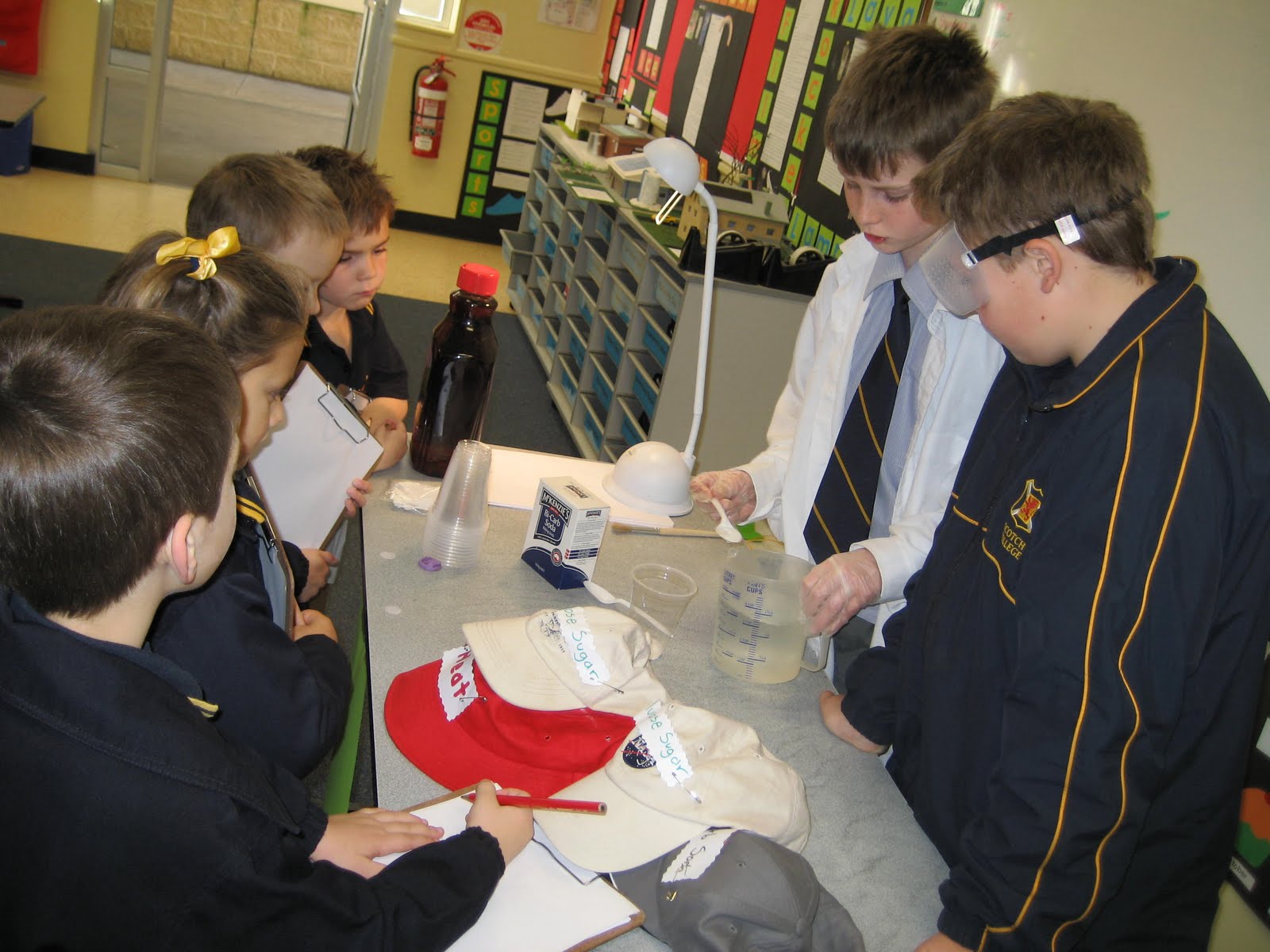
This term in Science the students are focusing on chemistry. A major theme throughout the unit is identifying and classifying the differences between chemical and physical change of different substances. Through a range of hands-on activities students will foster a deeper appreciation of the importance of science inquiry, whilst continuing to develop effective science report writing skills. Students will conduct two major investigations in class; ‘Gas bags’ and ‘Fizz whizz’.


Another exciting component of the Year 6 Science curriculum in Term 3 is the involvement in the Junior School Science Fair (Monday Week 5) for National Science Week. In the weeks leading up to this event the students will be analysing qualities that make an effective science presentation whilst becoming more confident with their experiment. This event will give the Year 6 group an opportunity to exhibit their fine leadership and presentation skills to their fellow students within the Junior School. A wide variety of experiments and demonstrations have been chosen for the students to relate to this year’s National Science Week theme of ‘React to Chemistry’. We encourage you to talk to your child about the Junior School Science Fair as they are very excited about the opportunity this event has given them. 

Alice in Wonderland - The Junior School Musical


Alice in Wonderland was a huge success with three highly-polished performances delivered to the Scotch Community at the end of Week 3.  The performance involved students from Year 2 – 6 and featured some excellent performances from the main cast, who were Year 5 and 6 students.  Congratulations to all those students involved!


National Science Week - React to Chemistry


School Science Fair. This event will be held on Monday 22nd August (Week 5) and has been designed to address the theme of ‘React to Chemistry’. The day will involve the three Year 6 classes presenting a range of safe and age appropriate chemistry based experiments and demonstrations to the other students in the school. Each class will have an allocated time frame of 40 minutes to explore the different workstations and will be involved in discovery-based learning.


To finish off this exciting day the students from Years 3 - 6 will be privileged to have a guest speaker, Mr Simon Lane, from ASC ship building. Simon is an engineer who has worked on the Air Warfare Destroyer program for 5 years. He will explain how science plays a crucial role in his position. Other activities that have been planned for National Science Week include; a daily whole school science quiz and a colouring in competition. There will be a range of prizes for these activities. 


Television Advertisements


Various techniques and media can be used to persuade an audience through television advertising. It is important to develop an awareness of how the media works to persuade us as the viewer. 


Throughout Term 3, students will be encouraged to plan and produce a television advertisement for a charitable organisation of their choice. Prior to developing a plan, they will analyse at least two existing advertisements, looking at methods they use for persuading viewers as well as various camera shots. As part of their plan, students will develop a storyboard and (in some cases) a script for the advertisement.  A selection of applications may be used to assist in the creation of the advertisement. 

Follow that Drop


To consolidate our understanding of our Term 2 topic, Sustainability, and to promote interest in our Term 3 topic, Global Citizenship, the children participated in an excursion on Friday, 12 August 2011, to the SA Water Learning Centre and Hope Valley Water Treatment Plant.  Both opportunities directly linked to our curriculum and offered excellent learning opportunities for Scotch Year 6 students. 


At the SA Water Learning Centre, students learnt to become water quality scientists and investigated the science behind making water clean and healthy.  At the Hope Valley Water Treatment Plant students went behind the scenes to explore the process of water treatment from reservoir to tap. 


The World of Narratives


Written Language is immersed in all curriculum areas, however, our focus during our literacy lesson is the Narrative genre.  Specifically, we will be exploring Myths, Legends, Fables and Fairy tales and the key language features found within each. 

Language features explicitly explored:
·       Direct and Indirect Speech
·       Spells, Charms, Incarnations, Curses
·       Alternatives for ‘said’
·       Similes
·       Symbols
·       Word intensity charts – characters and settings
·       Metaphors
·       Repetition
·       Alliteration
·       Connectives
·       Morals
·       Adverbials

When students have worked through the preliminary tasks they are ready to write their own Narrative.  Students are encouraged to choose from the above-mentioned Narrative Styles.  The language features listed above are the key components of the assessment rubric. 

The Crows Tree Planting Day


 On Tuesday, 2 August, the entire Adelaide Crows football playing squad planted trees with all Junior School students.  Each year level was assigned to a player and a planting area.  The Year 6 students skilfully planted trees along the banks of the creek beds to further enhance the beauty of our school grounds.  An opportunity was provided afterwards for students to have items autographed and meet other players.